EXPOSED: The Recruitment Scam Targeting African Cybersecurity Professionals
I've been targeted twice in one year by the same sophisticated scam operation—and I'm sharing this because if you work in cybersecurity, you need to know what's happening.
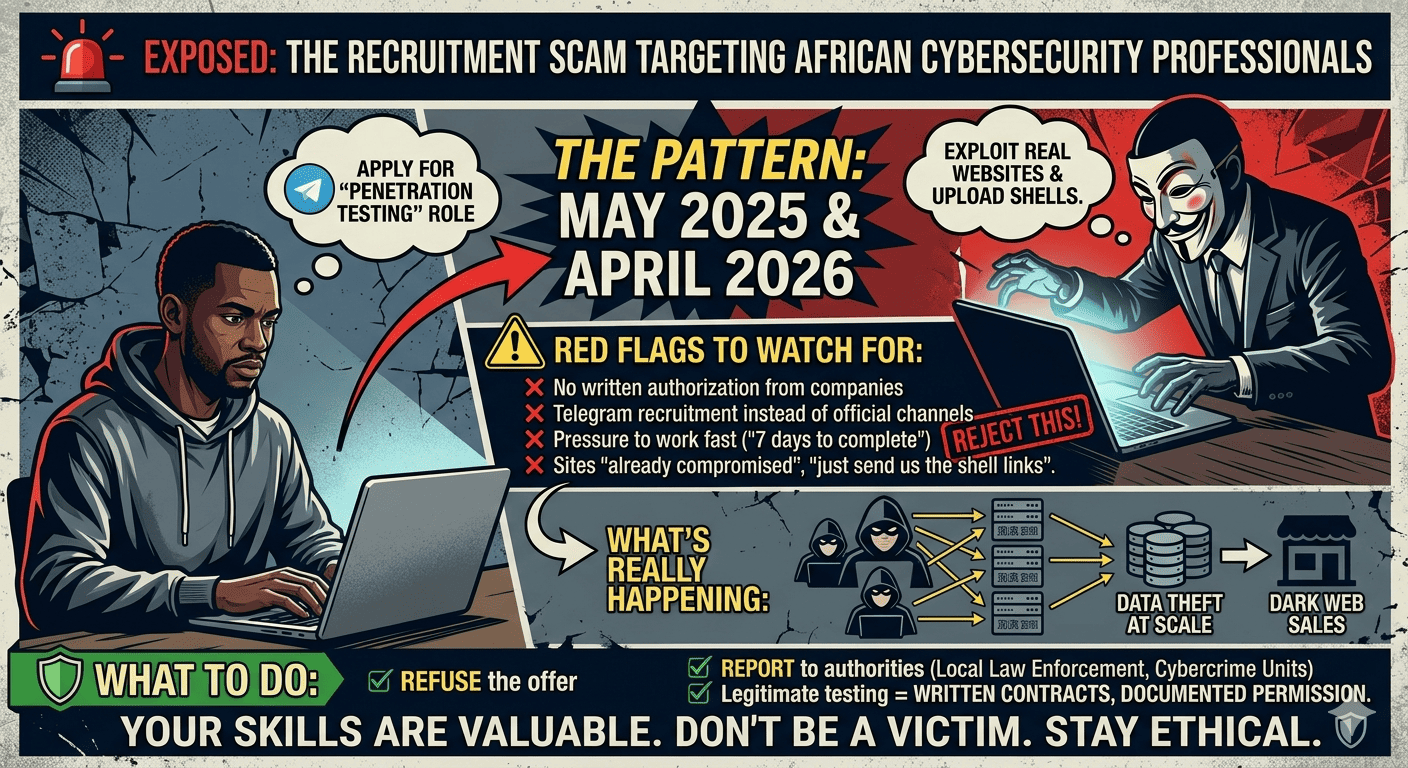
The Pattern:
May 2025: I applied for a penetration testing role. Looked legit. They moved to Telegram, offered impressive compensation, and asked me to test my skill by exploiting real websites and uploading shells.
April 2026: Same offer different recruiter. Same Chinese websites same playbook.
When I asked for written authorization from the target companies, the manager's response was telling: We don't have confirmed written approval... our colleagues have already managed to get shells... we're in urgent need of talents... you can stop at any time.
Translation: Hack these sites. We're already inside as test.
Here's What's Really Happening:
These aren't legitimate security tests. This is organized cybercrime
Recruitment of hackers — They find cybersecurity professionals (especially in Africa) and test if you'll commit crimes
Mass website compromise — Multiple real Chinese businesses are breached this way
Data theft at scale — Once they have shell access, they extract everything: customer data, financial records, trade secrets
Dark web sales — That stolen data gets sold to the highest bidder
This explains the massive data breaches affecting Nigeria and across Africa. Many of these breaches aren't sophisticated zero-days—they're orchestrated by criminal networks using compromised insiders and hired hackers.
Red Flags I Ignored:
What I Did:
I reported this to Chinese government cybercrime authorities and local law enforcement.
If you're reading this and recognize this pattern, do the same.
To Security Professionals Reading This:
Legitimate penetration testing = written contracts with target companies
Legitimate jobs = official channels, not Telegram recruitment
Legitimate tests = you never ask do I have permission?—permission is already documented
If it feels wrong, it is wrong
Your skills are valuable.
Don't let desperation or an attractive offer turn you into an accessory to organized cybercrime.
The legal consequences are severe, and these networks will use you and disappear.
To Companies & Government:
This is a coordinated operation.
Multiple recruitment attempts, targeting African tech talent, exploiting economic pressures.
The methodology is clear.
We need:
Awareness campaigns in tech communities
Stronger cybercrime cooperation between African and Asian authorities
Prosecution of these networks
But scammers count on silence.
If you've been approached with a similar offer—report it.
Your country's cybercrime unit, your local police, the companies being targeted.
Stay sharp. Stay ethical.