Get in touch
I'm always excited to take on new projects and collaborate with innovative minds.
Phone
Website
Address
Lagos
I'm always excited to take on new projects and collaborate with innovative minds.
Lagos
SOC analyst effectiveness relies on transforming reactive monitoring into anticipatory defense by mastering core threats like phishing, ransomware, and Living off the Land (LotL) attacks.

In the ever-evolving landscape of cybersecurity, SOC analysts stand as the frontline defenders. But defense is only as effective as the knowledge behind it. To proactively monitor, detect, and respond to threats, every SOC analyst must have a firm grasp of the most prevalent cyber threats. Let’s dive into the essentials:
Phishing remains one of the most effective initial access tactics. Attackers craft convincing emails, messages, or websites to trick users into providing credentials or downloading malicious payloads.
Key Detection Tip: Watch for unusual login patterns and privilege escalation after email-based compromise.
Ransomware isn’t slowing down — it’s evolving. Modern variants like LockBit and BlackCat now use double and triple extortion: encrypting files, threatening data leaks, and targeting customers.
Key Detection Tip: Monitor file system changes, especially mass encryption events and abnormal file extensions.
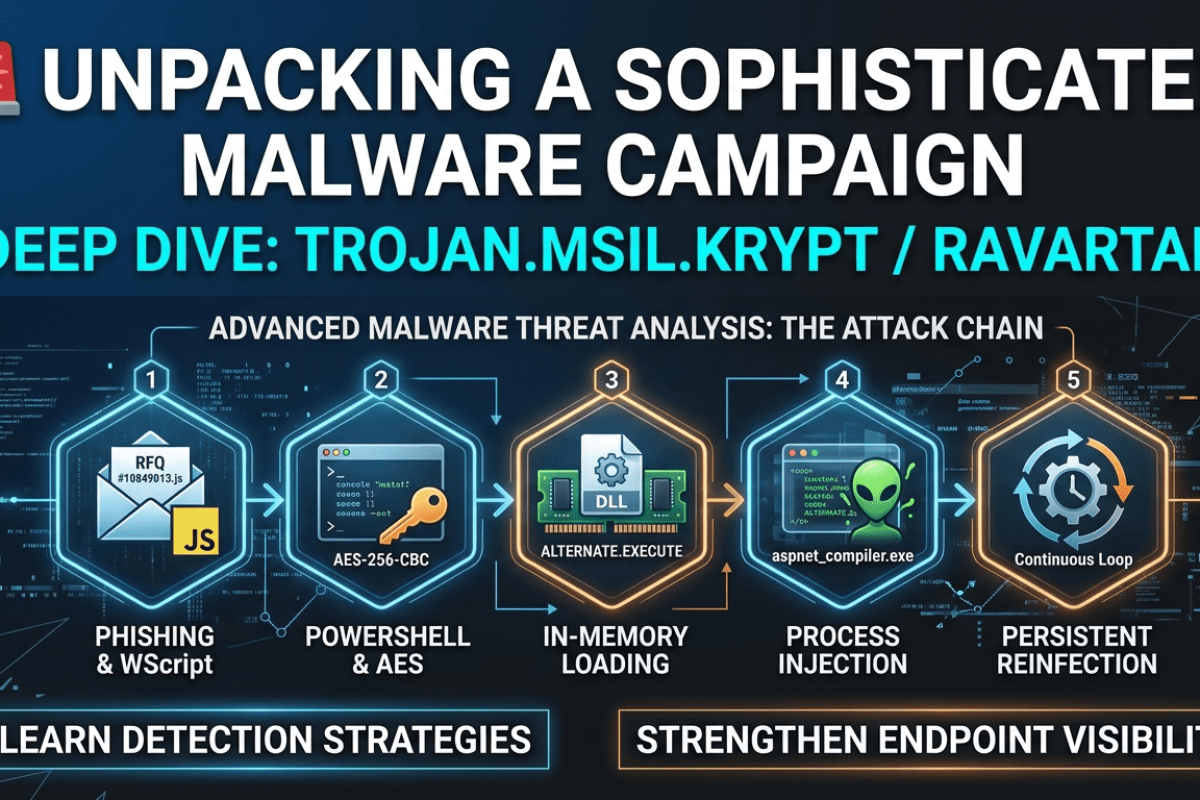
Threat actors increasingly abuse legitimate system tools like PowerShell, WMI, or PsExec — making detection challenging. This approach minimizes malware footprints, bypassing traditional defenses.
Key Detection Tip: Monitor script block logging, unusual PowerShell commands, and execution from unexpected users.
High-profile incidents like SolarWinds highlight the devastating impact of compromised third-party software.
Key Detection Tip: Set alerts on abnormal application behavior or unusual network traffic after software updates.
Armed with leaked password databases, attackers launch large-scale automated login attempts on various services.
Key Detection Tip: Track multiple login failures from the same IP and abnormal access patterns.
DNS — meant for domain resolution — can be hijacked to smuggle data in or out. Malware encodes information into DNS queries, bypassing firewalls.
Key Detection Tip: Monitor unusually large DNS requests or domains generating excessive queries.
When a vulnerability is discovered but remains unpatched by vendors, attackers rush to weaponize it.
Key Detection Tip: Watch for unexpected service behavior or spikes in traffic to exposed applications.
Final Thoughts: Stay Proactive, Not Reactive
Cyber threats won’t wait. Will you be ready?
Let’s connect — what emerging threats are you seeing in your SOC?
In conclusion, a SOC analyst’s effectiveness hinges on a deep, proactive understanding of the prevailing threat landscape. Mastery of these seven core threats—from phishing and ransomware to stealthier techniques like LotL and DNS tunneling—transforms reactive monitoring into intelligent, anticipatory defense. By leveraging targeted detection strategies and maintaining vigilant oversight of key systems and user activities, SOC analysts can shift from merely responding to incidents to preventing and disrupting attacks earlier in the kill chain. Ultimately, cyber resilience is built on this foundation of continuous learning, proactive hunting, and the strategic application of threat knowledge against evolving adversary tactics.